Züri Fäscht
Every three years, on the first July weekend, Züri Fäscht draws around 2.5 million visitors with its unique mix of street fair, fairground, music and parties. For three days, residents of Zurich and visitors from all over the world take over the streets along the Limmat and the lake basin.
The challenge
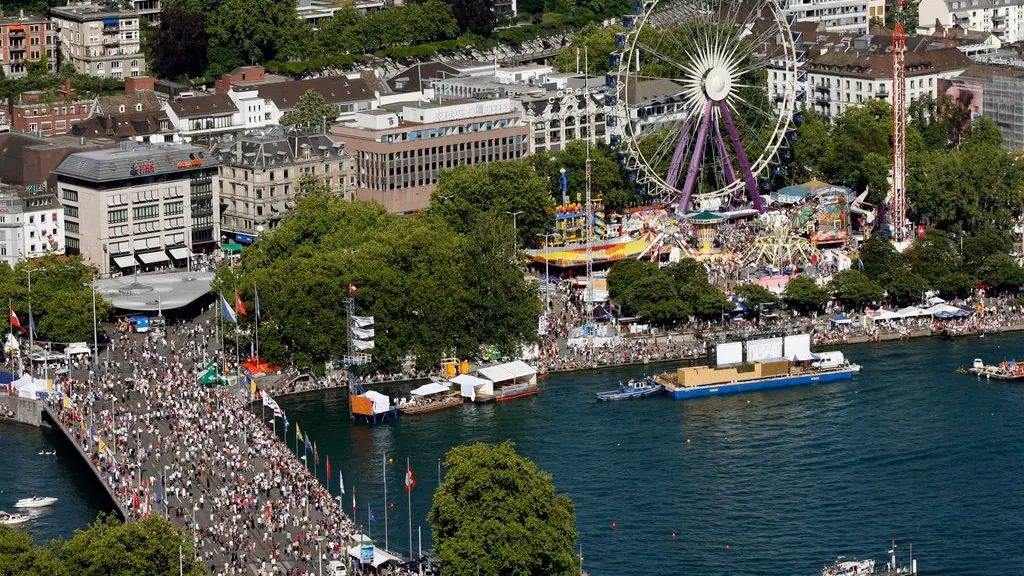
During the festival, the inner city is transformed completely — from the central station to Landiwiese and Zürichhorn. Bus stops become stages, the Quaibrücke is overrun with people, and the wide Opernplatz turns into a fairground.
Suddenly, this and much more is used by more visitors than the entire population of Zurich. For crowd management, waste handling and the medical service, this is a major challenge — as is keeping the Züri Fäscht experience safe and enjoyable.
Why is it so hard? The toughest variable in planning is human behaviour. Even with a well-thought-out schedule and careful site planning, unexpected behaviour can lead to crowding.
Digitalisation and data as part of the solution
For more than 10 years now we've been deploying digital tools to identify, analyse and address weak points. Digitalisation lets us capture the festival's situation holistically, replay it, and develop data-driven solutions. Connected systems let us close the information loop and feed insights back to the visitors themselves.
App data — location signals and favourite programme items — is hugely helpful here. Visitors, as part of the festival, support us with this data.
How does app data help during the festival?
During the event, app data is collected and processed for situational awareness and prediction:
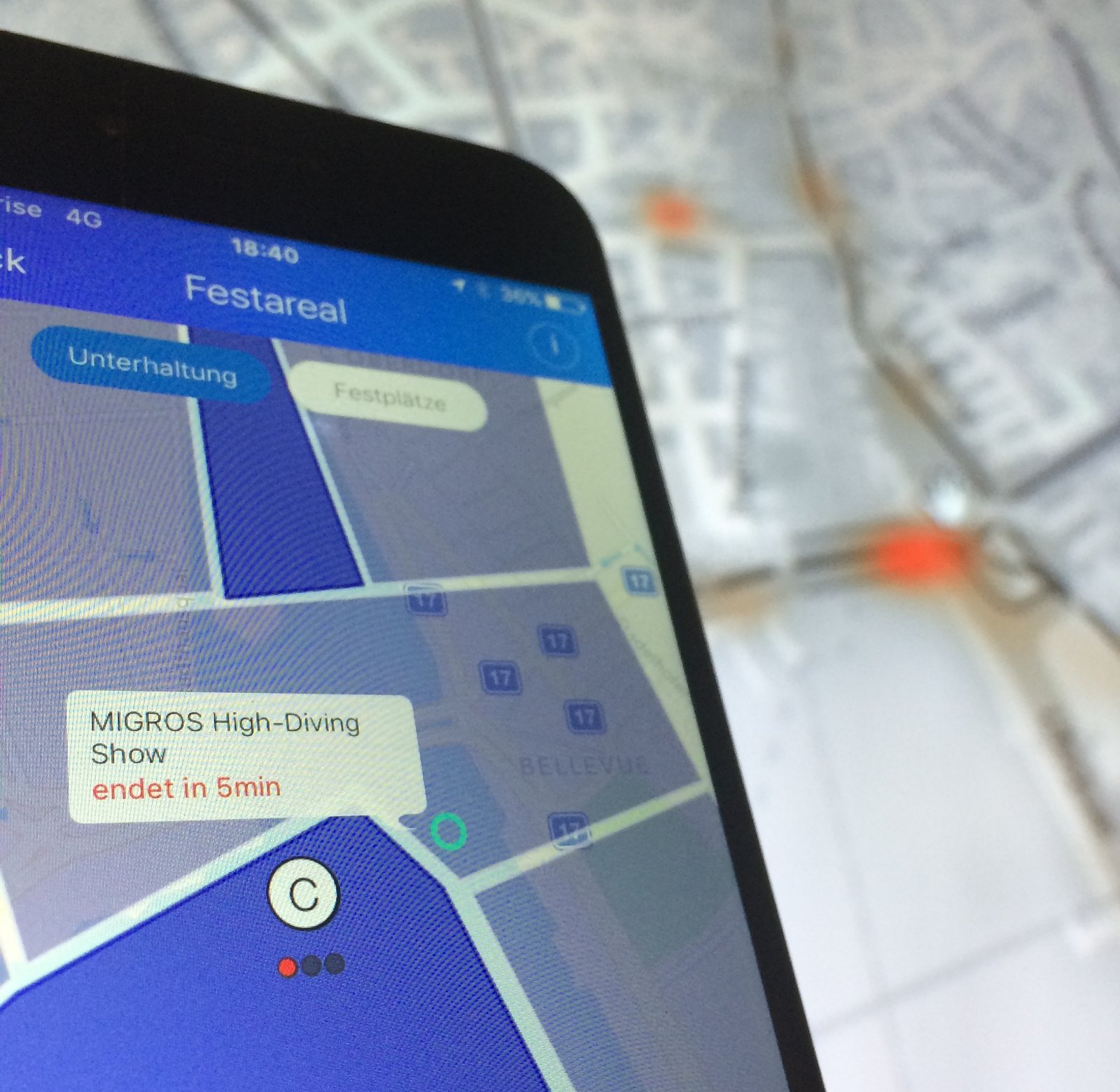
- Location data feeds a live heatmap of crowd density.
- Visitors who favourite programme items in the app help us forecast which acts will draw the biggest crowds.
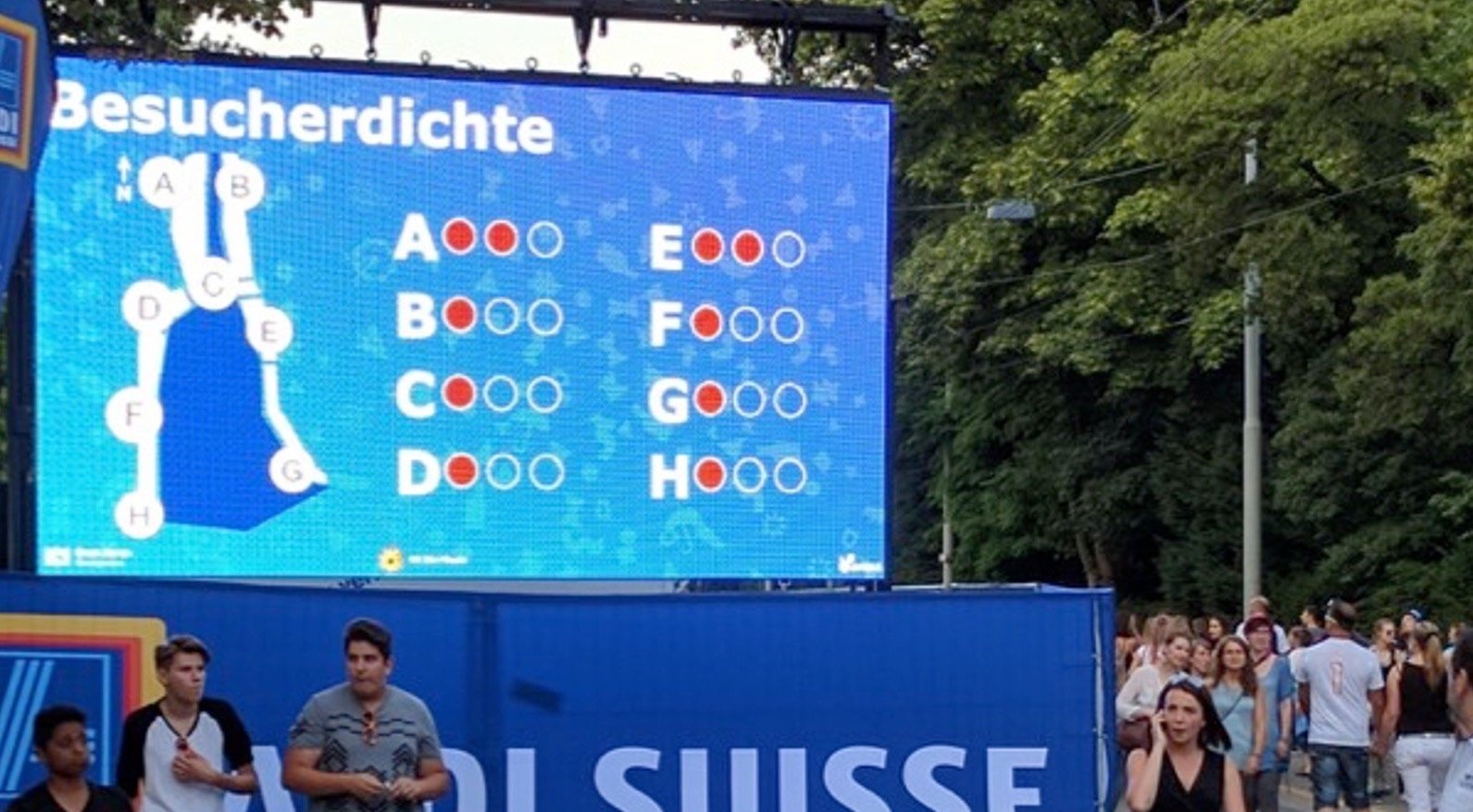
- Security staff in the role of "crowd spotters" make on-site observations and report trends — which then flow back into the visitor app and onto signage.
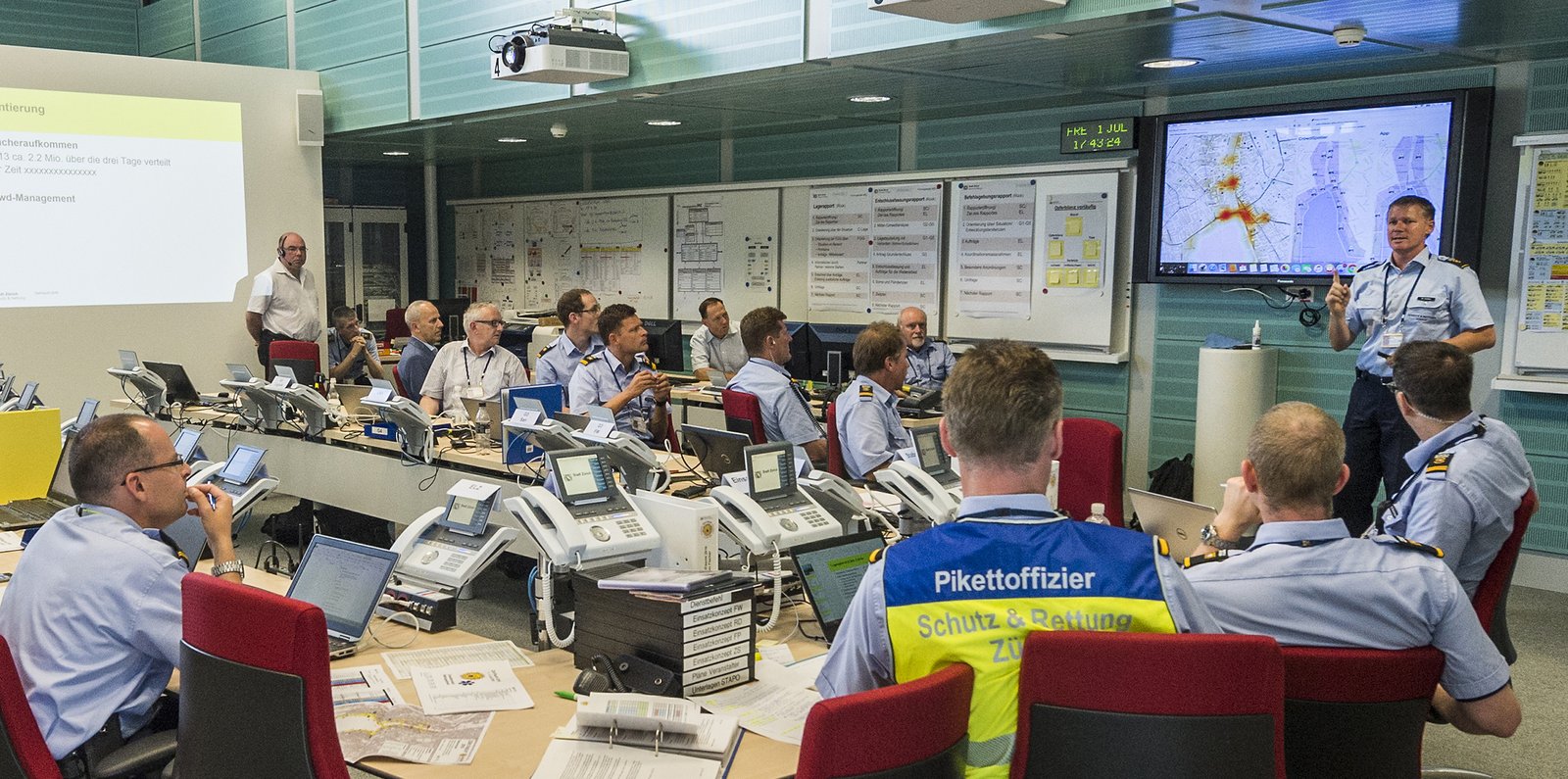
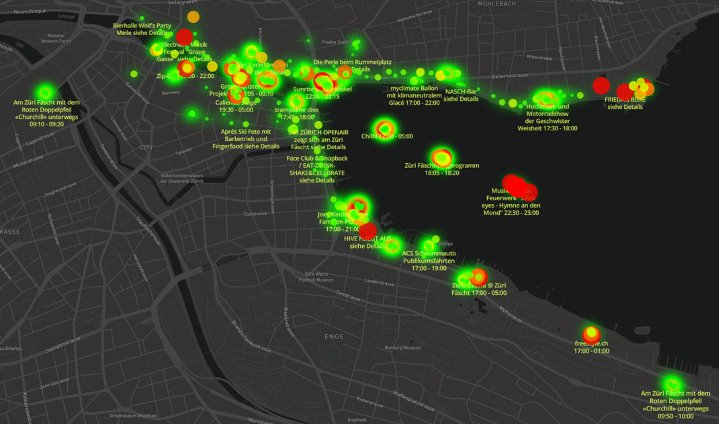
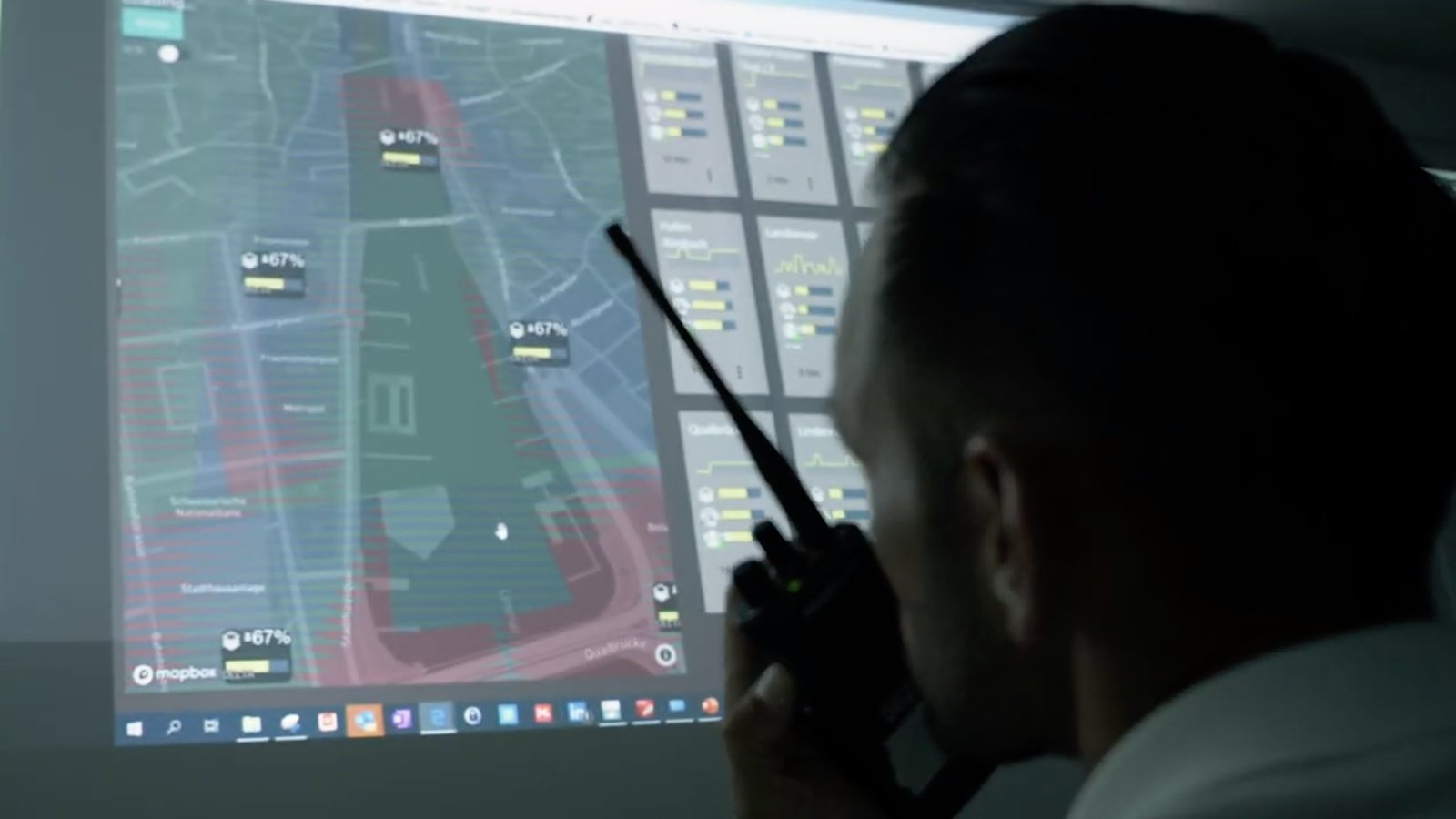
Information is shown both inside the app and on 18 publicly visible large screens. Not everyone enjoys being in a tightly packed crowd, so it matters to communicate what visitors can expect — so they can decide for themselves: "Is this crowd okay for me, or do I want to avoid it?"
App data: what's actually needed?
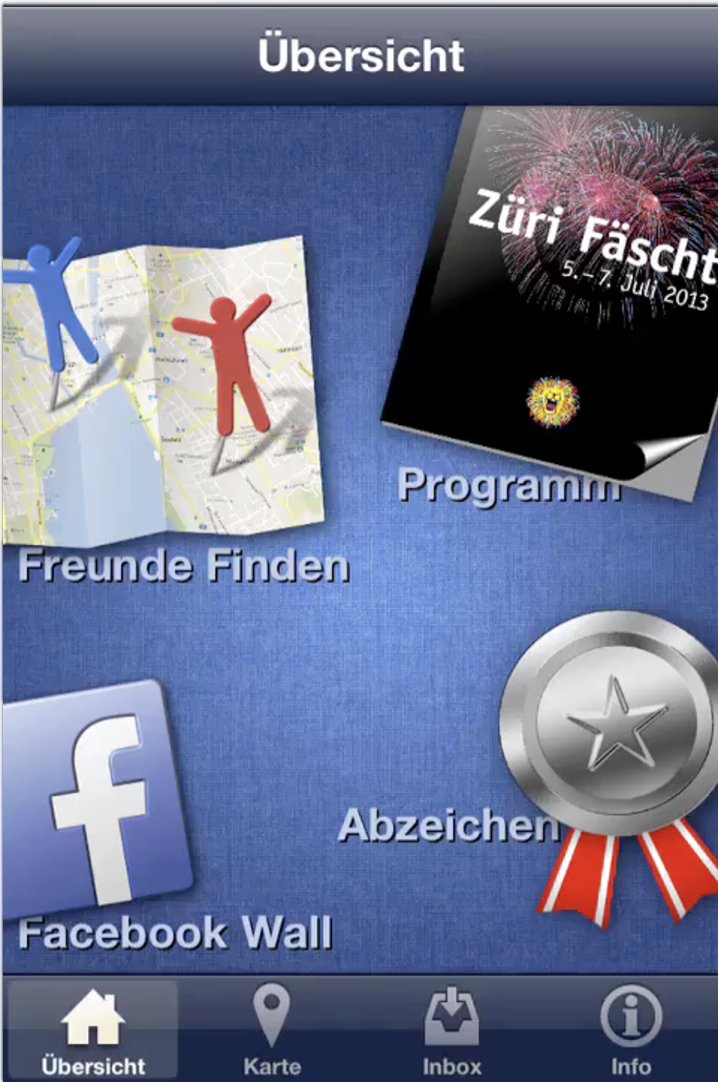
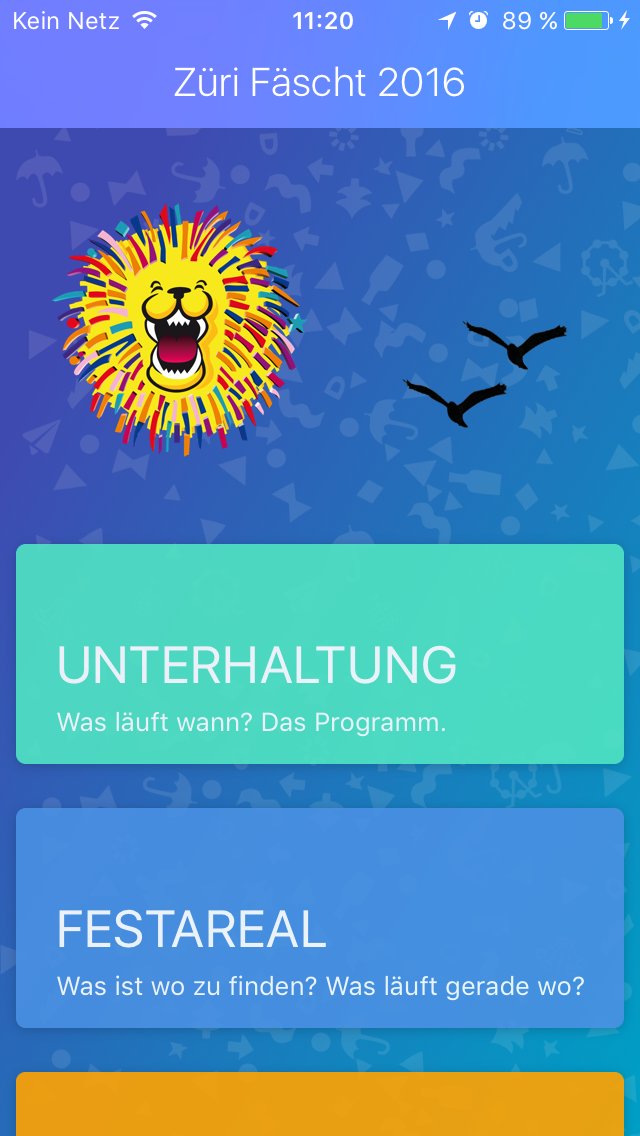
For more than 10 years and now for the fourth time, visitors contribute their data to make the festival safer and more memorable. The Züri Fäscht app delivers a set of features that turn the festival into the city's signature event.
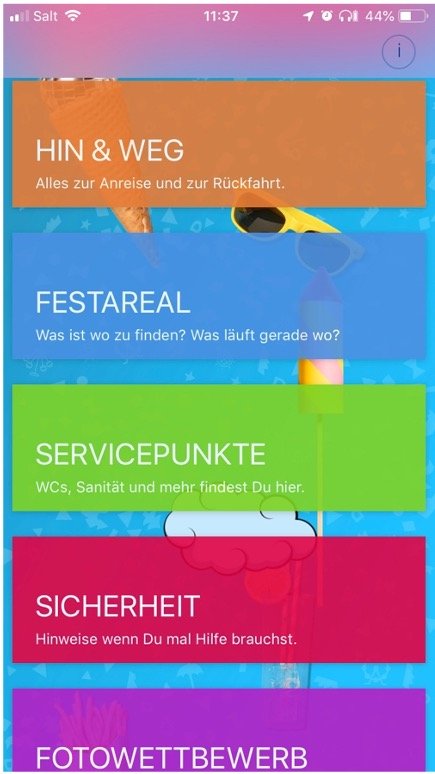
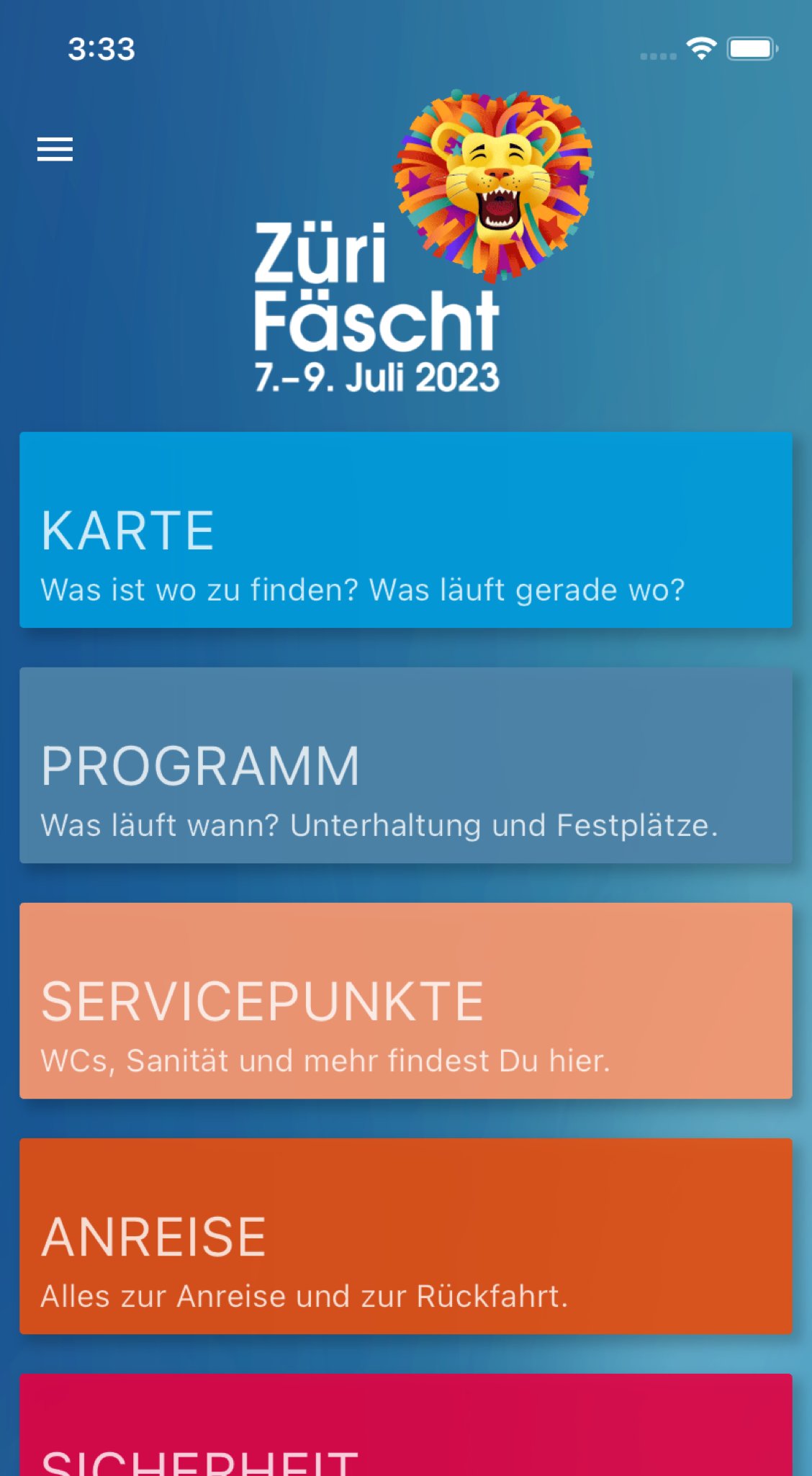
During the festival from 7 to 9 July, the app captures location data — GPS coordinates with timestamps — at regular intervals*. The data is stored in a Zurich-based data centre and processed for visualisation.
* to save battery, devices may transmit irregularly.
Processing
Simply put: new GPS coordinates are mapped onto a grid and counted. This happens at regular intervals; the grid is hexagonal. The resulting grid with location counts forms a heatmap — coloured more or less intensely depending on each cell's occupancy. Only aggregated and anonymised data is shared with Zurich City Police, Schutz & Rettung, and the Züri Fäscht organising committee.
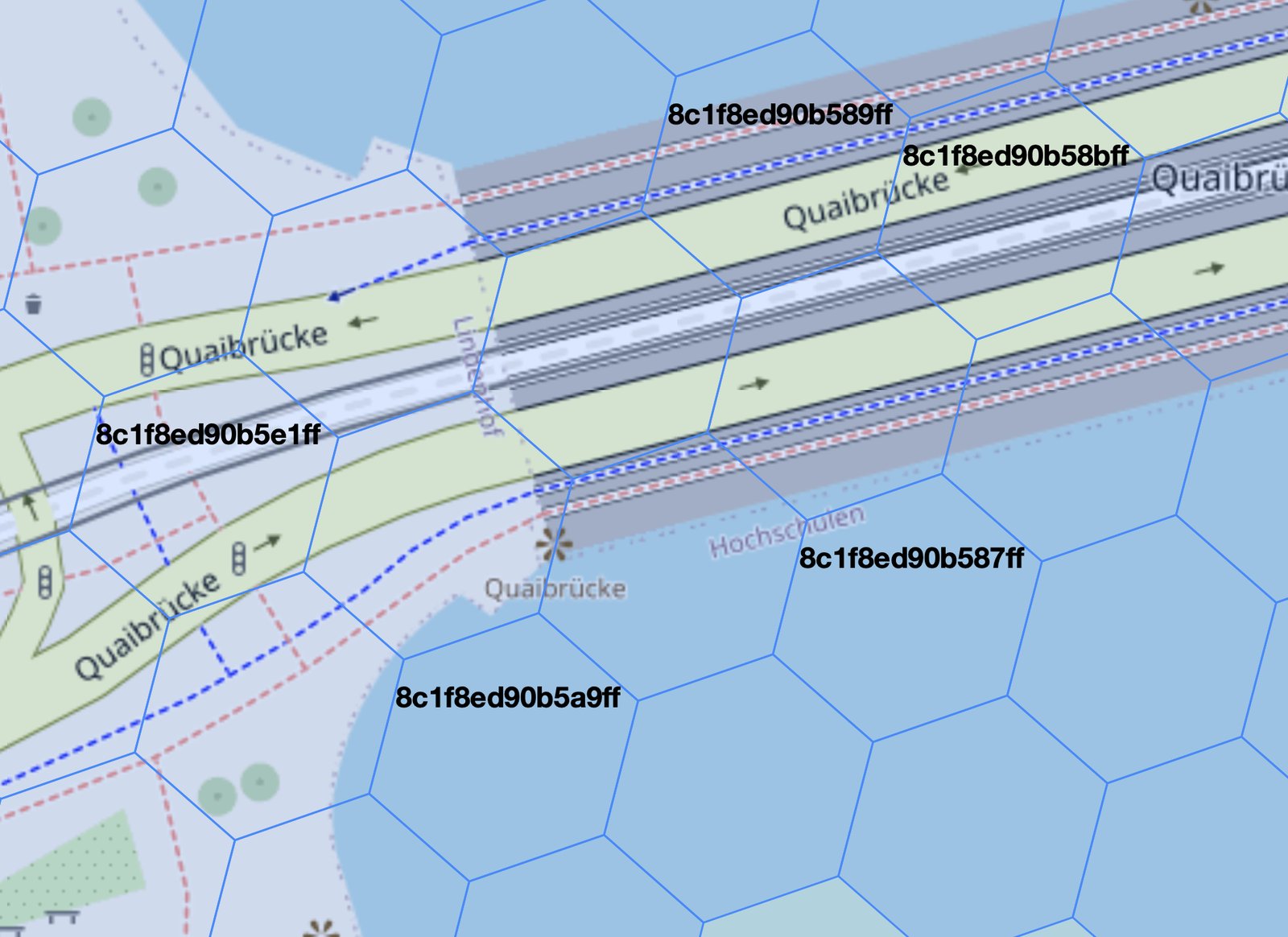
Note: no individual raw location data is shown or shared. As a user you have the right to opt in — only with your consent do we collect data. You can also request deletion of your individual data at any time.
How does the data help with planning?
During the event, the data is invaluable for the operational teams. Just as importantly — arguably more so — is the post-event analysis: did the festival plan and the layout work as intended?
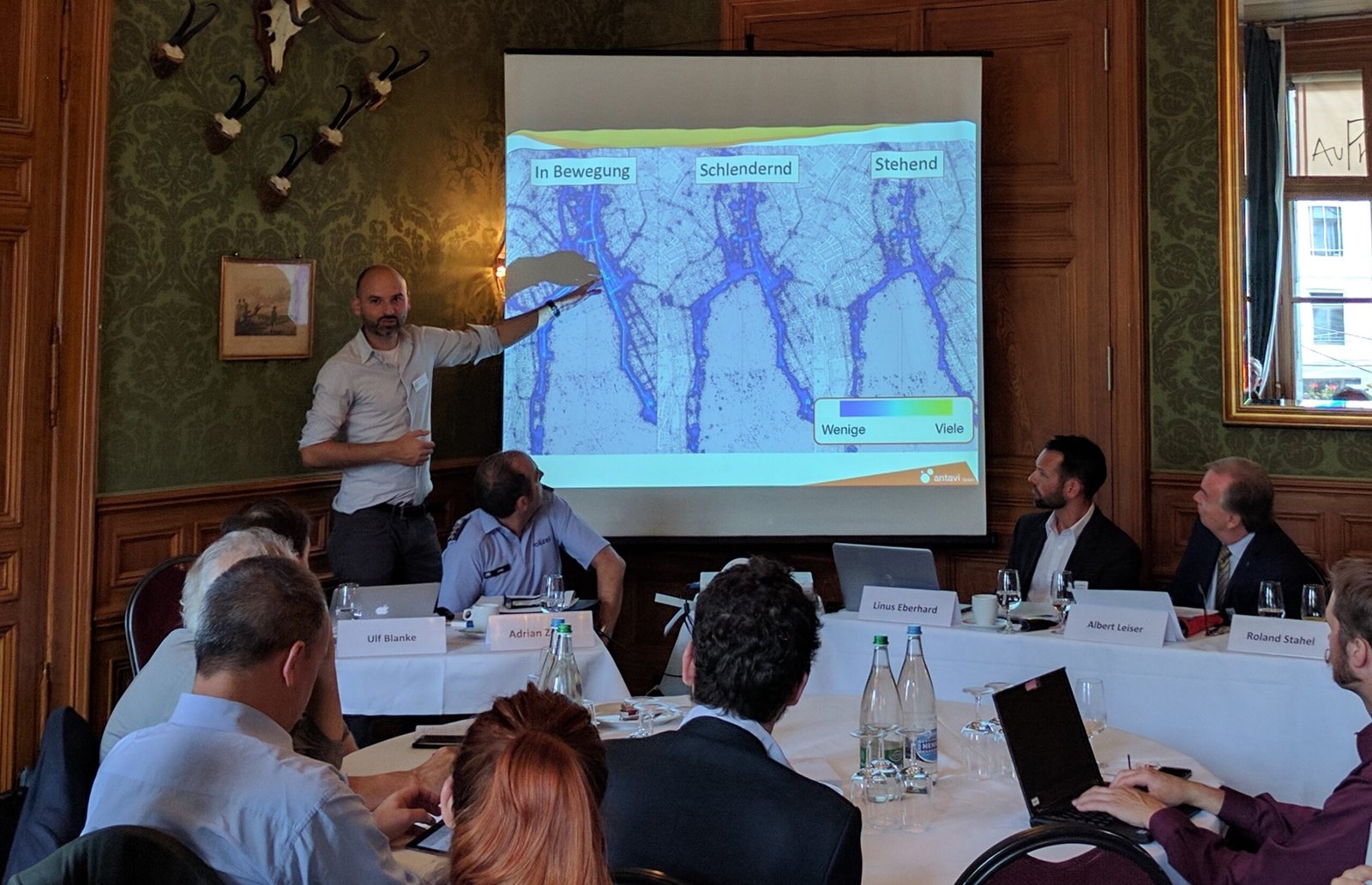
One example: the introduction of multiple firework shows since 2016. This was triggered by heavy density at Baur au Lac in 2013. The data allowed a closer look at visitor flows and let us draw conclusions on what to change. As a result, additional fireworks and a drone show were introduced.
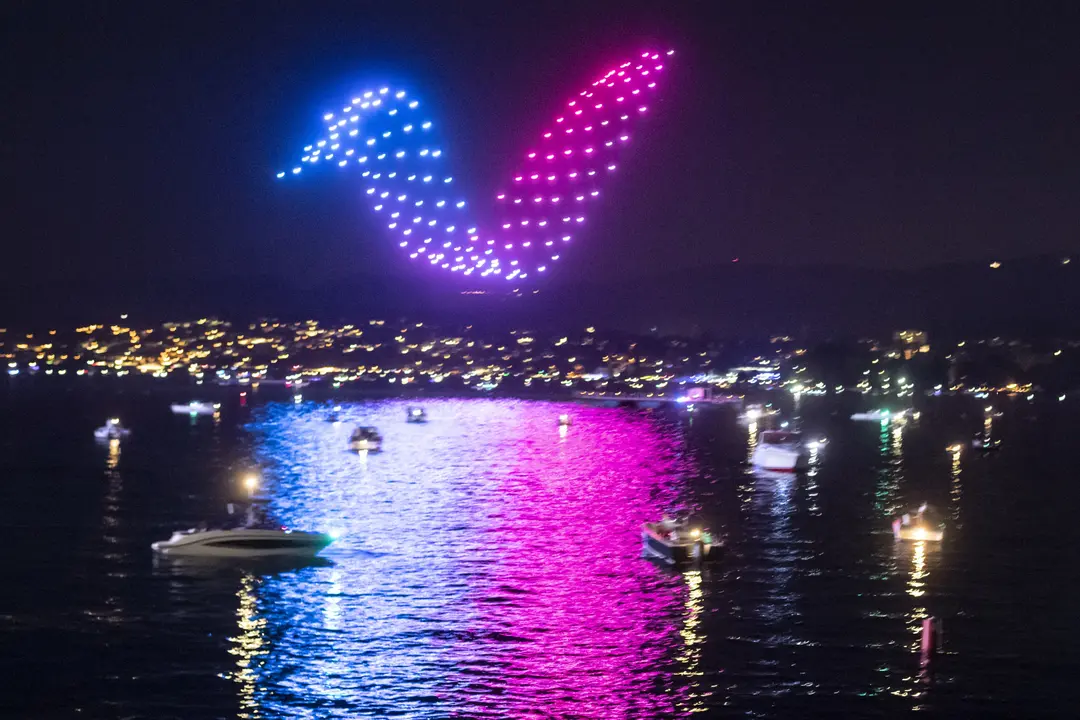
At other locations, like Limmatquai, the data revealed that opposing stages can disrupt pedestrian throughflow. As a result, one side was reduced and from 2016 onwards Bahnhofstrasse was integrated into the festival plan.
These measures — and many more — improved crowd management and were implemented based on detailed analysis of the data.
Conclusion
Using data productively makes Züri Fäscht safer and more enjoyable. The information loop the data creates enables more, better, safer programmes. Analysis and evaluation let organisers make informed decisions and continuously improve the festival experience — adapting the programme, identifying bottlenecks, optimising safety, and ultimately delivering a better experience for visitors. The data plays an essential role in optimising Züri Fäscht and helps make every edition outstanding and safe.
The focus here is on app data. The video from Zurich City Police's Crowd Management Unit shows just how broad the task is.
Background
The idea of using an app to support crowd management originated at ETH Zürich. More on that soon. In the meantime, here are a few impressions.